- Built
- c. 1897
- Style
- Queen Anne Queen Anne
- MACRIS
- NWB.409 ↗
- Formerly
- 20 Broad Street
History
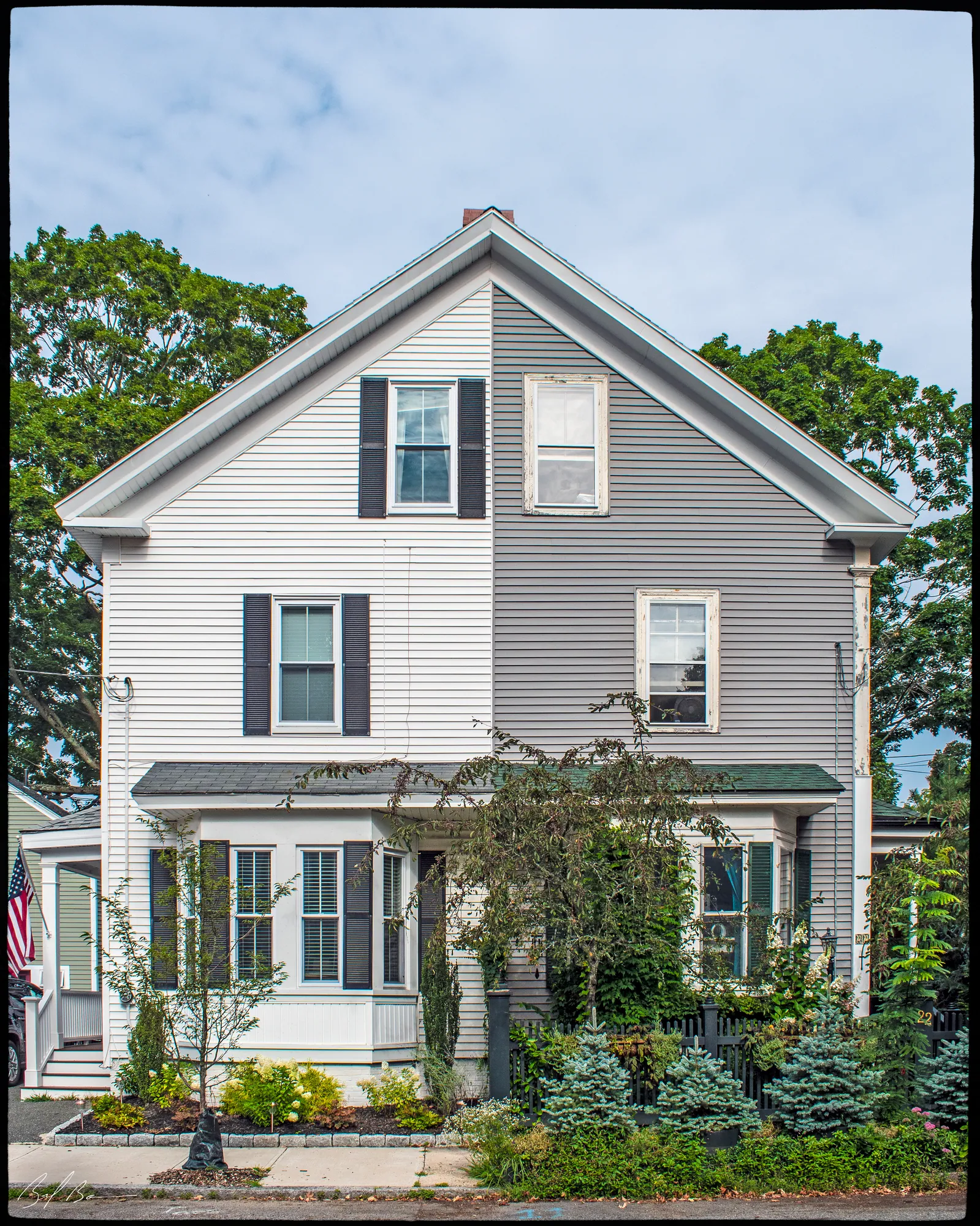
This house has features of both the Queen Anne and Stick styles. The irregularity of plan and the variety of surface texture are both features of the Queen Anne style. The bay windows, multiple roof lines, and small panes set around a larger one within a window frame are also typically Queen Anne.
The brackets under the eaves, the porches, the expression of the unseen structural frame, and the diagonal stickwork are all characteristic of the Stick style.
The original owner of this house was apparently Mary L. Lunt. The Lunts lived at 12-1/2 Broad Street until 1896, when Mr. Lunt died. In that year, his wife is listed as living at 20 Broad Street. It is quite possible that Joseph Lunt owned this home earlier as an investment. However, he lived closer to Merrimack Street. Joseph Lunt was the principal partner in the firm of Joseph C. Lunt and Company, undertakers. Lunt’s business was located at 212 Merrimac Street in 1895.
Planning work on this building?
Reviews that may apply
Newburyport Historic District (National Register, listed 1984) · Demolition Control Overlay District (DCOD) · Parcel 57-3-A/D · Zone R2
Zoning Board of Appeals may decide
In the DCOD. Whether removing more than 25% of the exterior walls needs a DCOD special permit depends on the building’s status in the 1984 National Register nomination, which this site has not matched for this lot yet; the Office of Planning and Development keeps the list.
Newburyport Historical Commission decides whether to impose a delay
Built c. 1897, so 75 or more years old: removing more than 25% of its exterior walls, changing the roofline (pitch, towers, cupolas, anything projecting above the roof), moving it, or adding a dormer that misses the setback and pitch rules is "demolition" under the demolition delay ordinance. The Commission holds a hearing within 30 days and may impose a delay of up to 18 months. Parts of the building documented as younger than 75 years are excluded on a written determination by the Zoning Administrator.
Code of Ordinances ch. 5 art. X, §§5-307–5-308 (June 2026) ↗
Zoning Administrator first stop
Every project starts with a zoning determination from the Zoning Administrator, which says which of these reviews apply and whether the work also needs zoning relief (a special permit for a non-conformity, or a variance). Fees, forms and filing deadlines are on the City’s site.
Not legal advice, not an official City publication, and not the position of the Historical Commission or any board. Says what the ordinances say as of September 30, 2026; the Zoning Administrator decides what applies. Boundaries: Merrimack Valley Planning Commission / City of Newburyport GIS (MIMAP); 1984 status from the National Register nomination's district data sheets. City's quick guide to the DCOD and demolition delay ↗ · Do I need approval? Project by project →
More photos
1 view · Biff Bouse
More built 1860–1900
Sources
- Massachusetts Cultural Resource Information System, NWB.409
- 1914 Sanborn map, sheet 7 (Library of Congress, Geography and Map Division, Sanborn Maps Collection)