Prospect Street
MACRIS NWB.V · area form, 1973
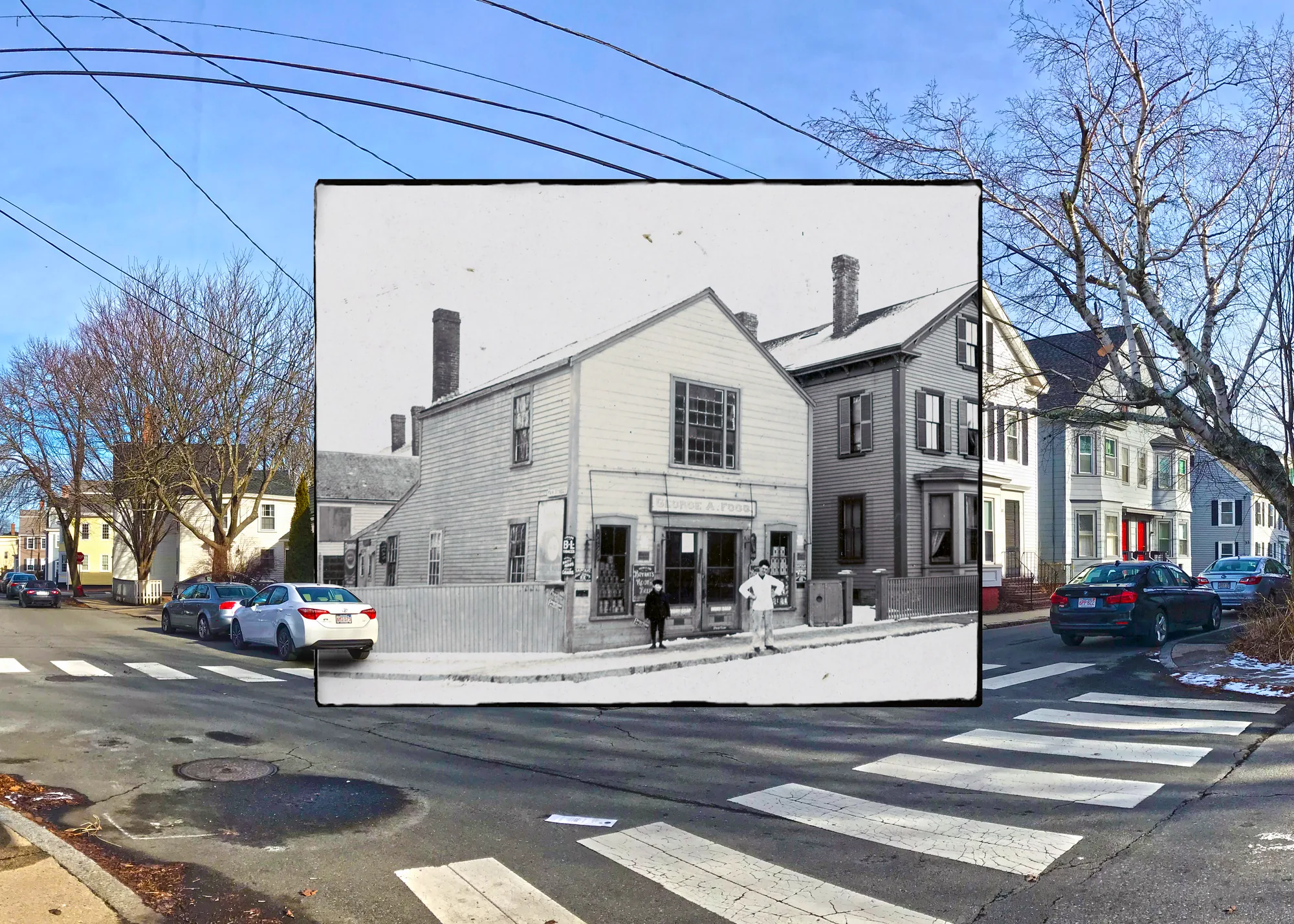
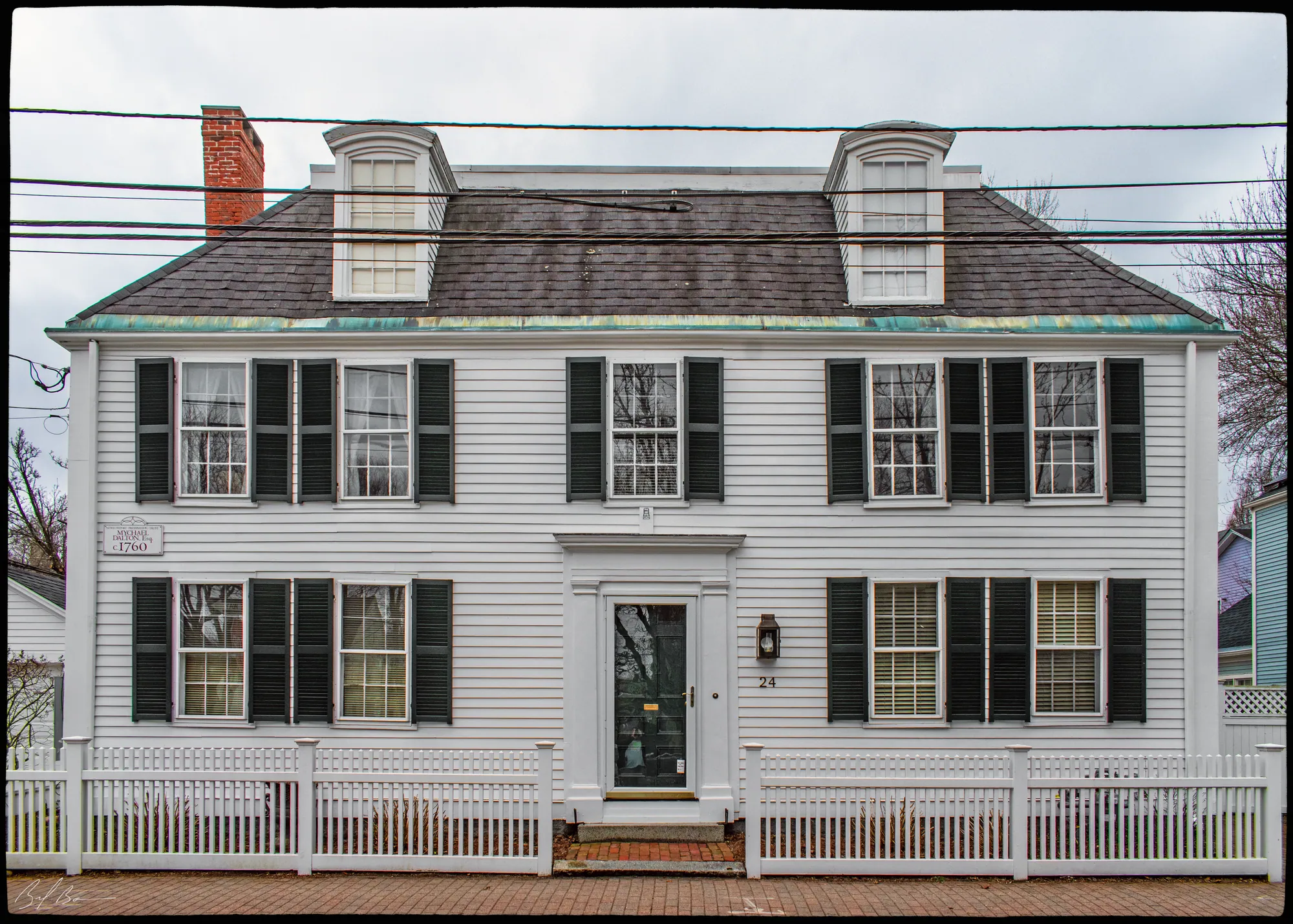
Prospect Street now runs from State Street to Bromfield Street, but it was assembled in stages. The survey says the town of Newbury accepted a way from Fish Street (now State) to King Street (now Federal) in March 1749 and named it Prospect Street. Roberts Street, from Federal to Lime, followed in 1802 and Newbury Street, from Lime to Bromfield, in 1828; the city joined all three under the Prospect name in February 1874.
Two clockmakers from Bradford lived near the State Street end: Samuel Mulliken, who built a house and shop there and died in 1756, and Daniel Balch, who bought property nearby that same year. A meeting house for a new church, later known as the Fourth Religious Society, was raised on the street in June 1793, and the Whitefield Congregational Church at State and Prospect was dedicated in March 1852.
Summarized from the Massachusetts Historical Commission's area form. See the MACRIS record ↗
Prospect Street
MACRIS NWB.AK · area form, 1980
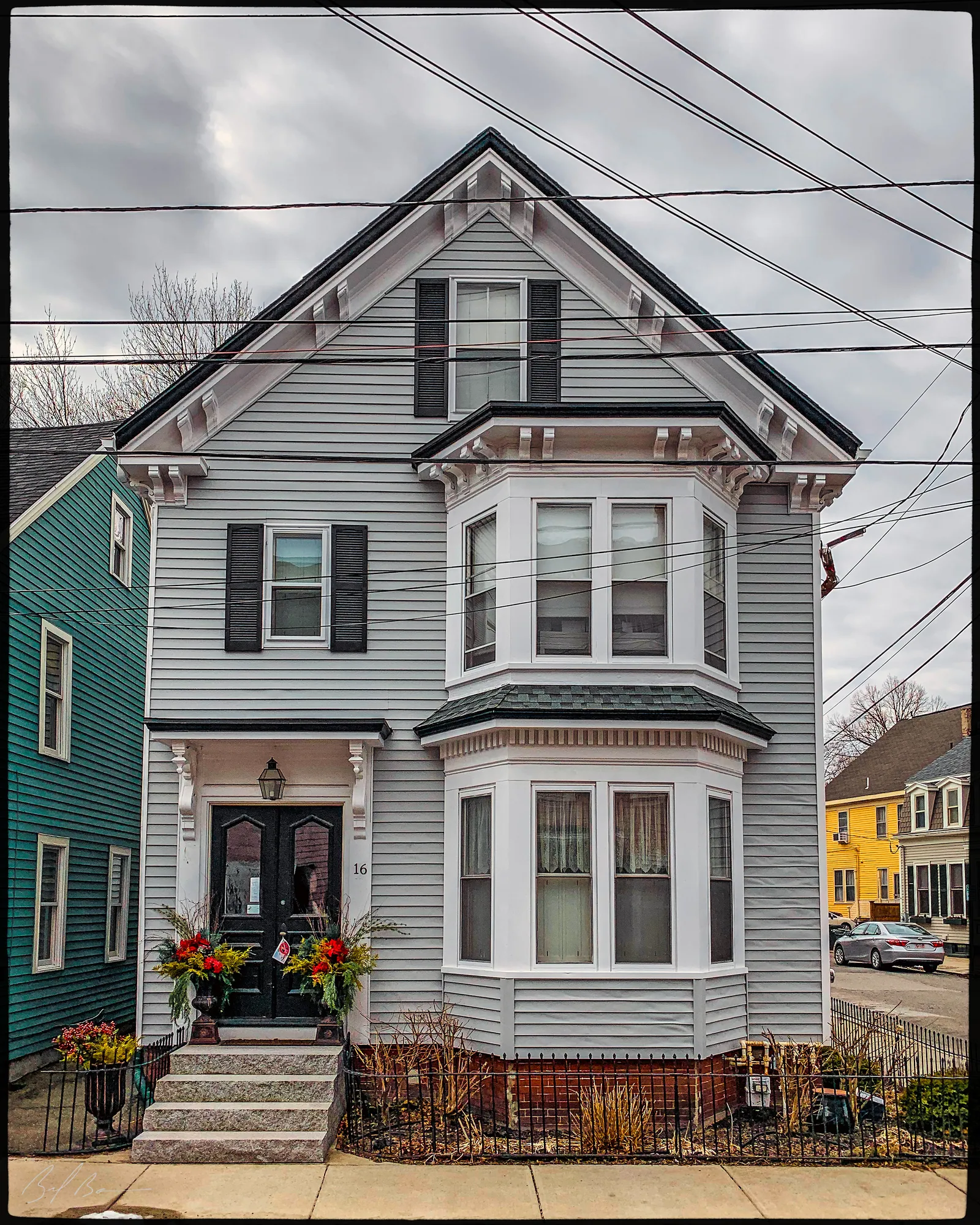
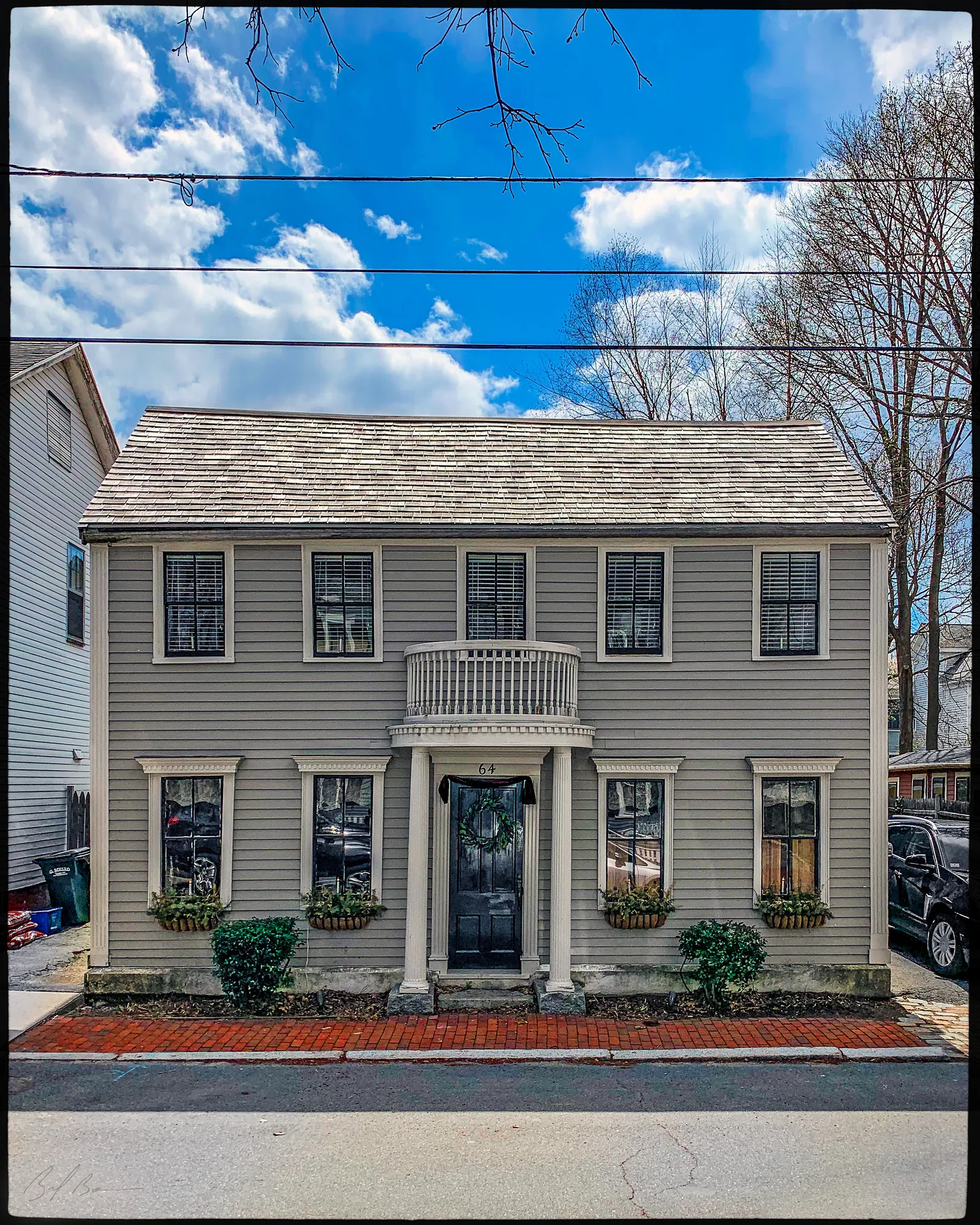
Prospect Street between State Street (once Fish Street) and Federal Street (once King Street) lies next to Market Square. Most of its houses date from the mid-19th century, and in 1851 its residents were mainly tradesmen, shopkeepers, house carpenters and a few seamen. Number 7 is a typical gable-front Greek Revival house with a sidelighted doorway.
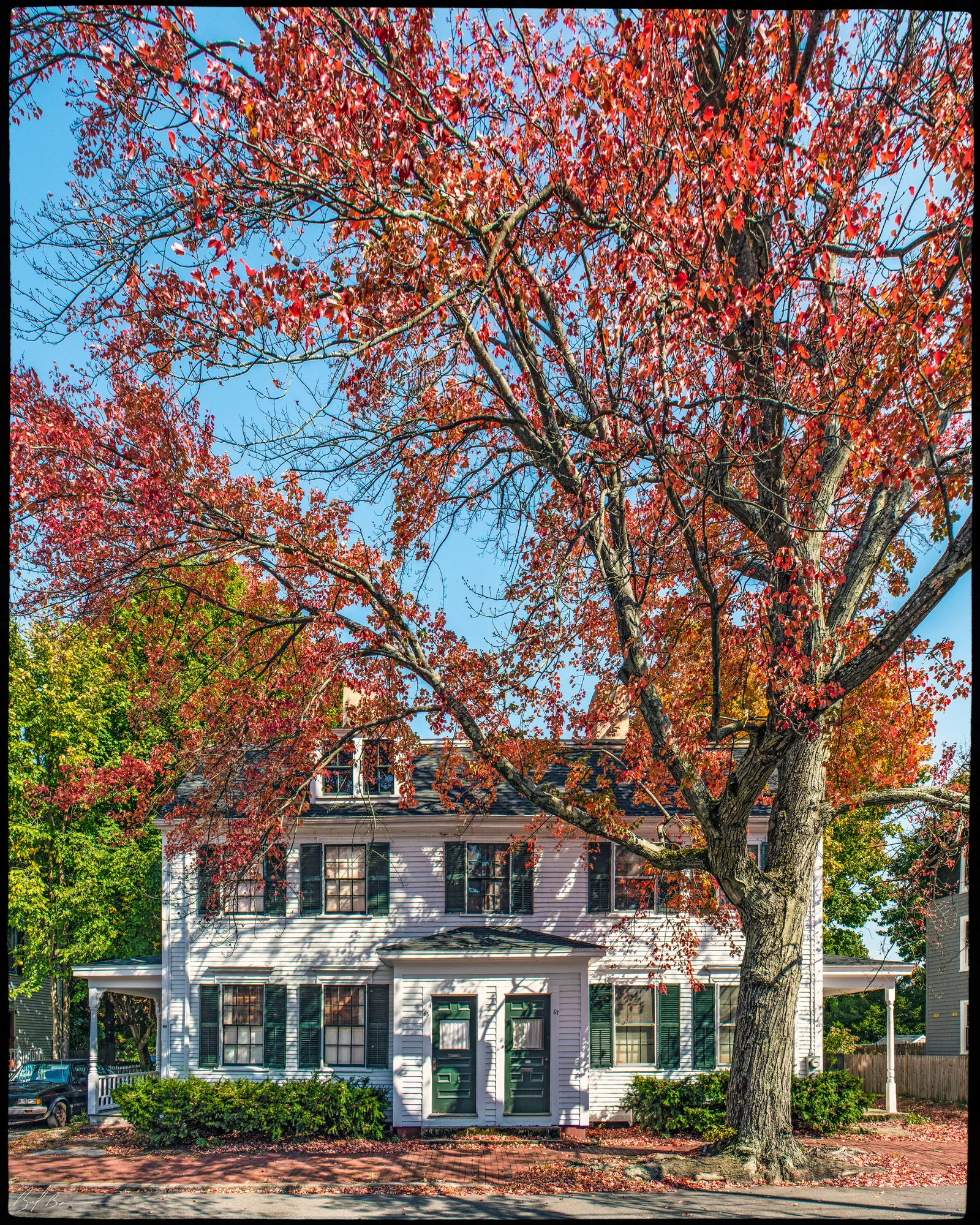
The larger Greek Revival house at 14 may have been a boarding house. The doubles at 11-13, 15-17 and 19-21 are a little later and were probably built as speculative housing; the form links such building to workers drawn by the textile mills of the 1840s and 1850s and the shoe industry of the 1860s and 1870s.
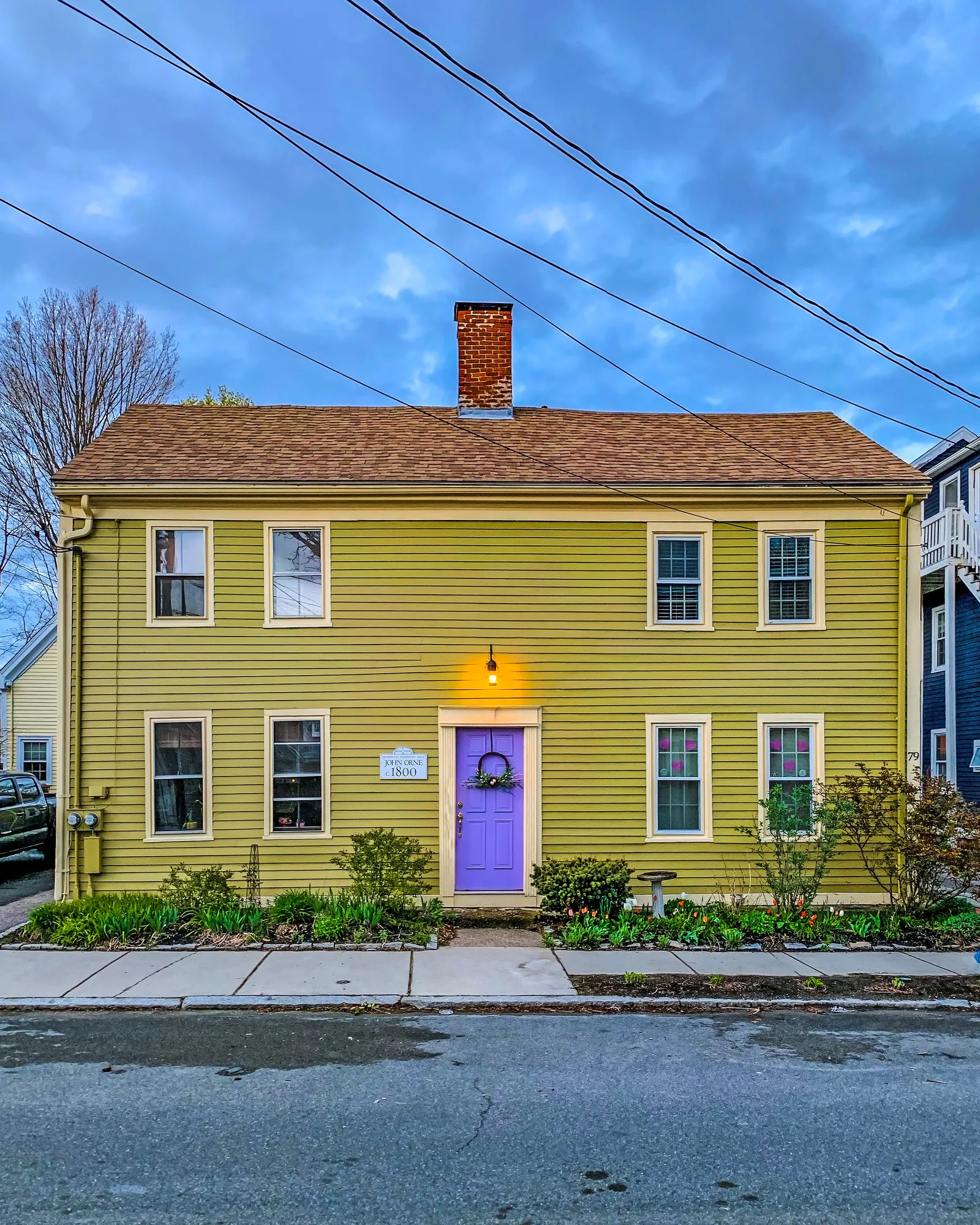
Older houses include 9 and 18-20, thought to date from the late 18th century, and 22, whose doorway closely resembles that of number 7. In 1851 Mrs. Annister Hale, who kept a store at 27 State Street, lived at 18-20. Number 37 is a three-story Federal house with an entrance portico, owned in 1851 by the heirs of shipowner Enoch Osgood.
Summarized from the Massachusetts Historical Commission's area form. See the MACRIS record ↗