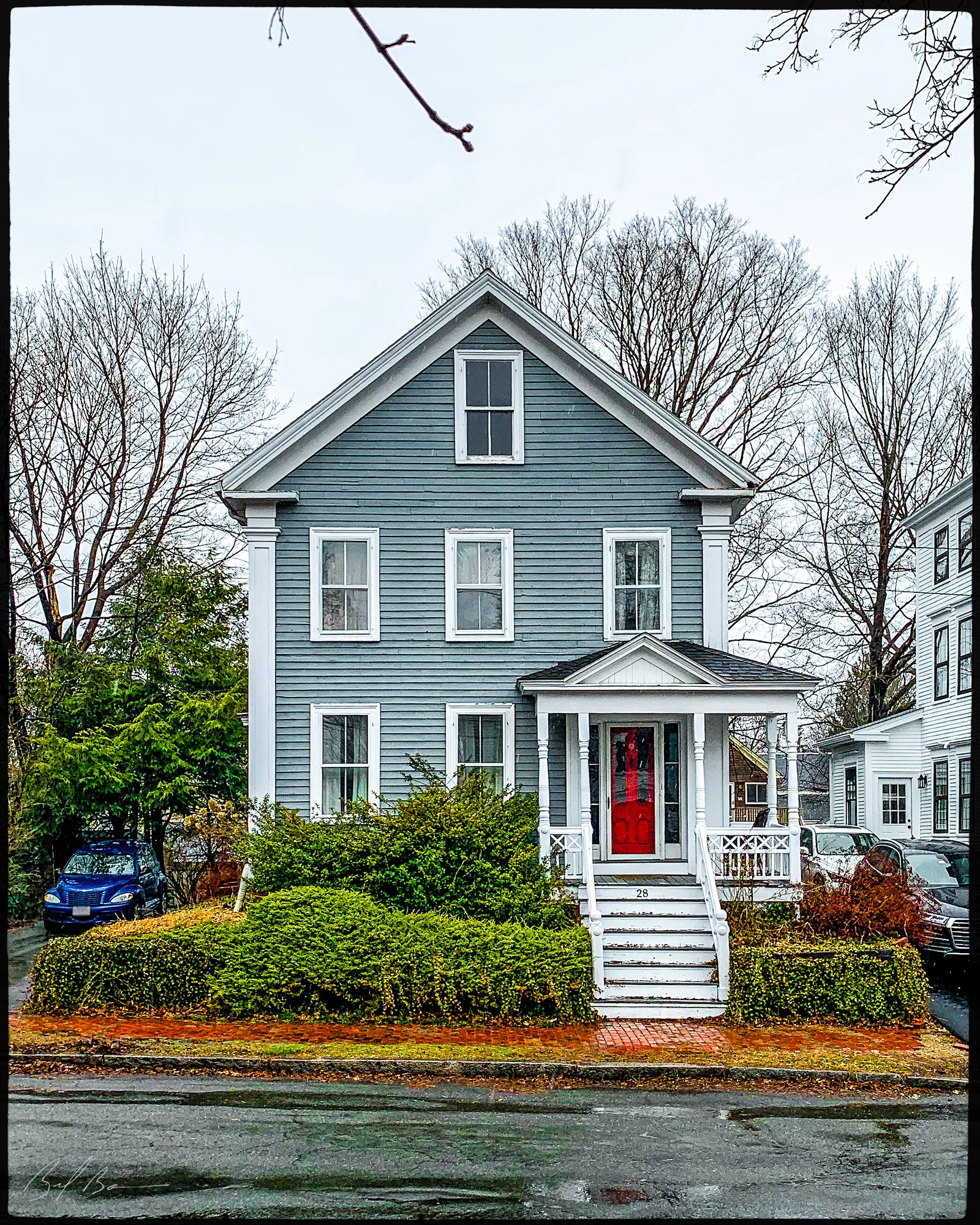
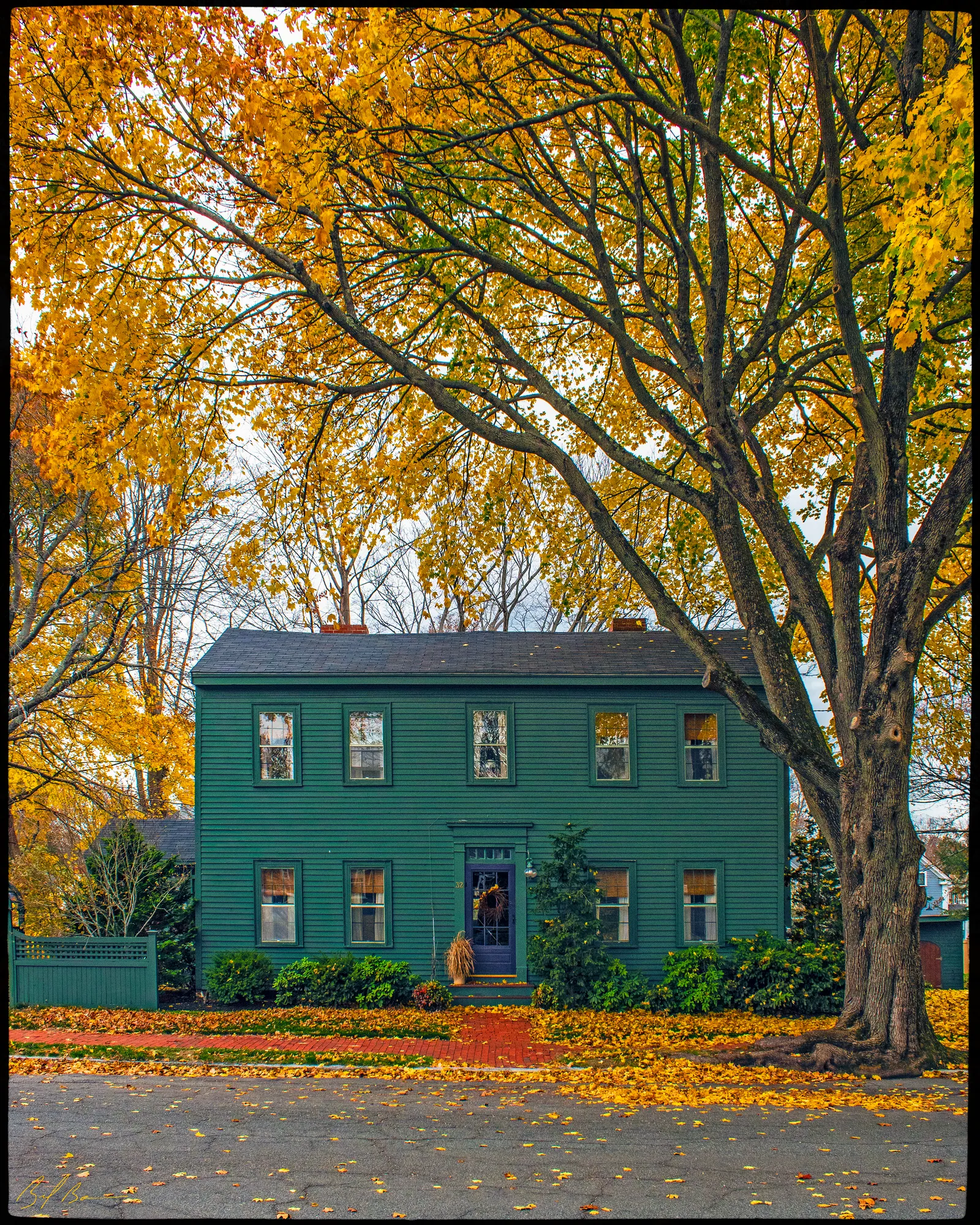
Tyng Street (Upper)
MACRIS NWB.AS · area form, 1980
This record covers five houses at the upper end of Tyng Street, near High Street. The form places them in the wider growth of the streets running up from the Merrimack River to High Street, where Oakland, Tyng and Broad Streets filled with cottages and boarding houses for shipbuilding workers. It notes that houses farther from the river tend to be later, and that speculative building became common, as seen here.
Four of the houses, 38, 40, 42 and 44 Tyng Street, were built to one design, probably all by Richard G. Adams. Each is two and a half stories with a gable roof and a small entry porch on turned posts, with Queen Anne touches such as mixed clapboard and shingle siding, small panes framing a larger window, and gabled side wings.
48 Tyng Street was built in 1866 by A. S. Flanders, who ran a junk and scrap iron business. It is a plain single-family house with a low-pitched roof and heavy molding hinting at the Italianate; its door has been altered.
Summarized from the Massachusetts Historical Commission's area form. See the MACRIS record ↗
Tyng Street (lower)
MACRIS NWB.AU · area form, 1980
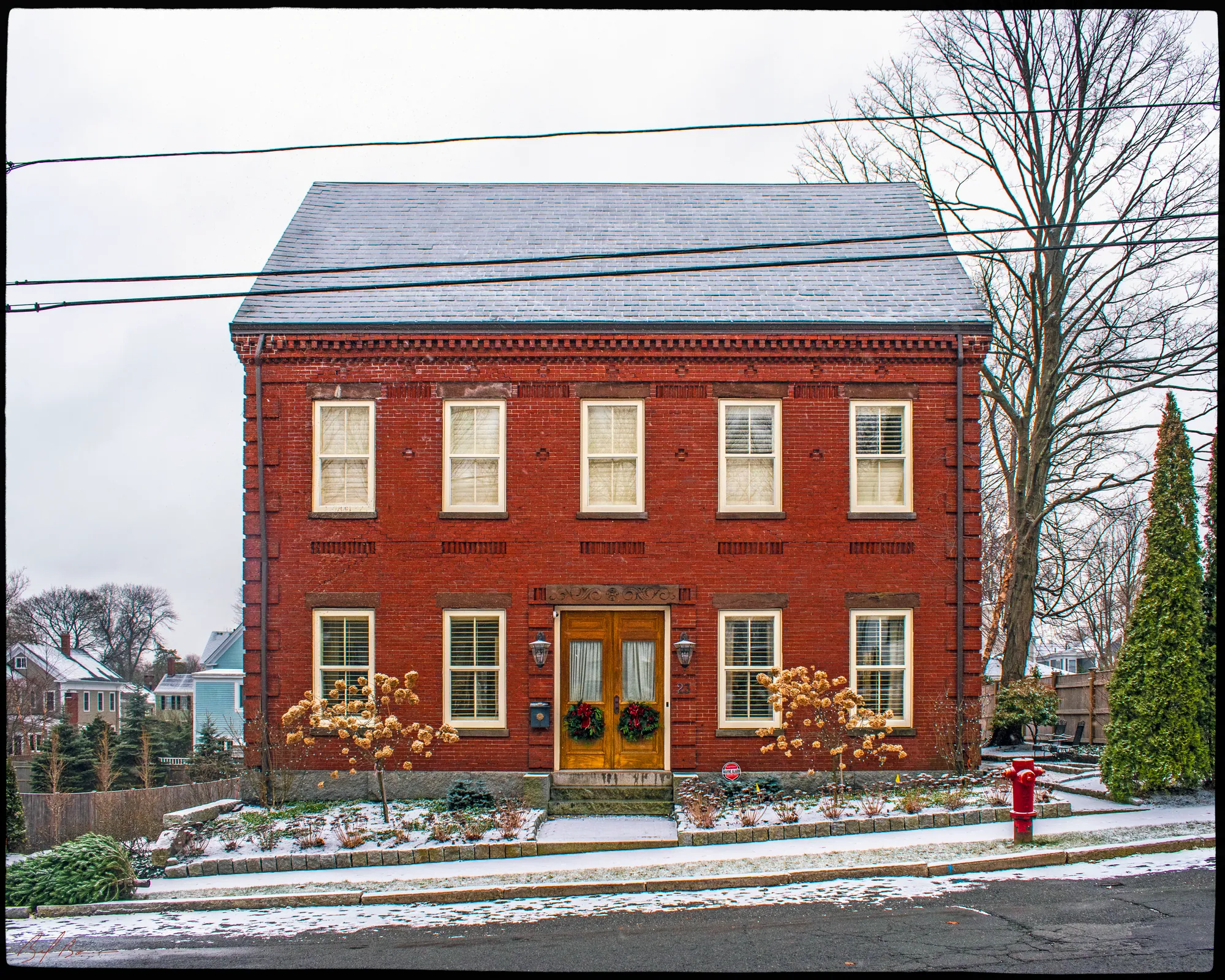
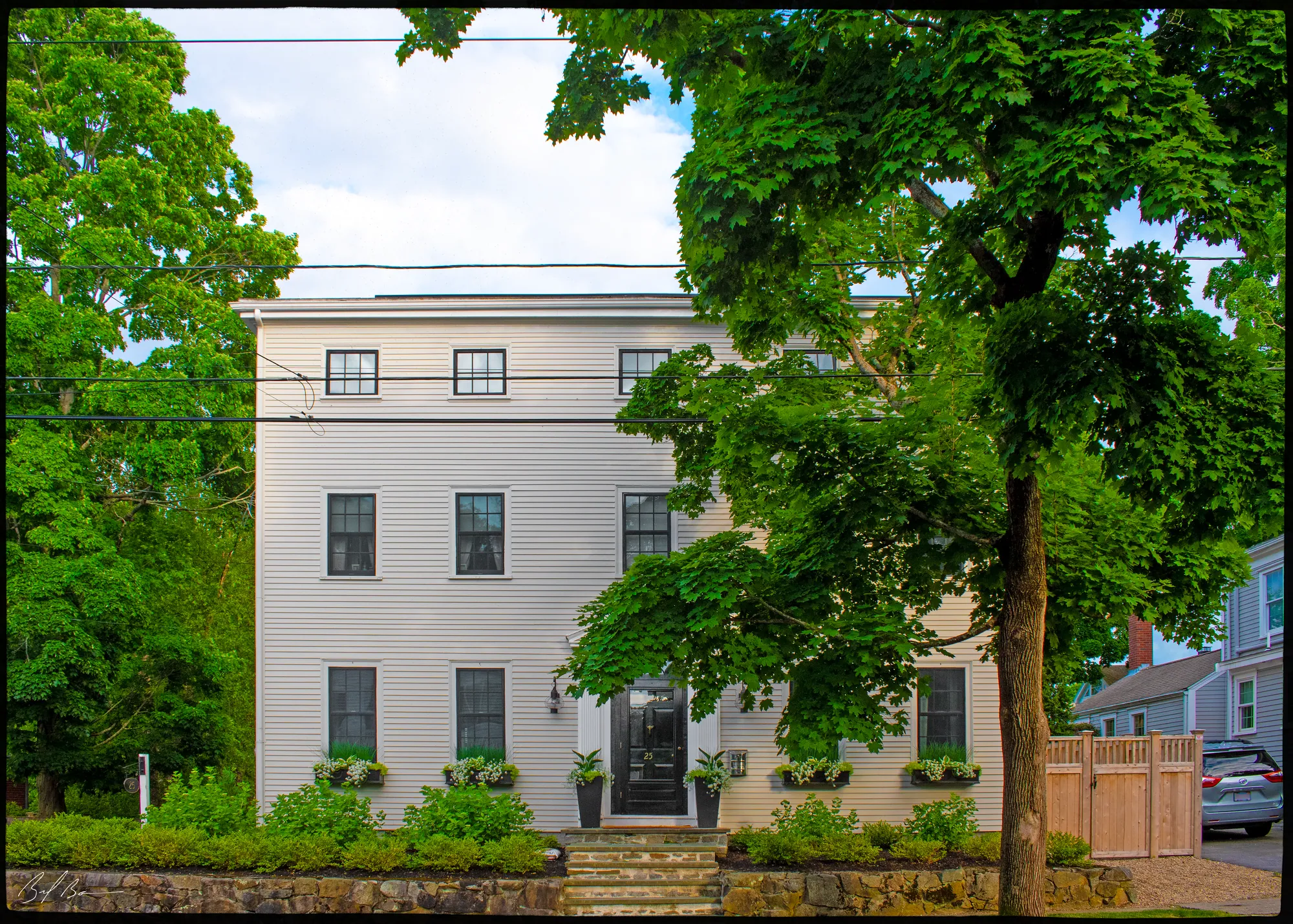
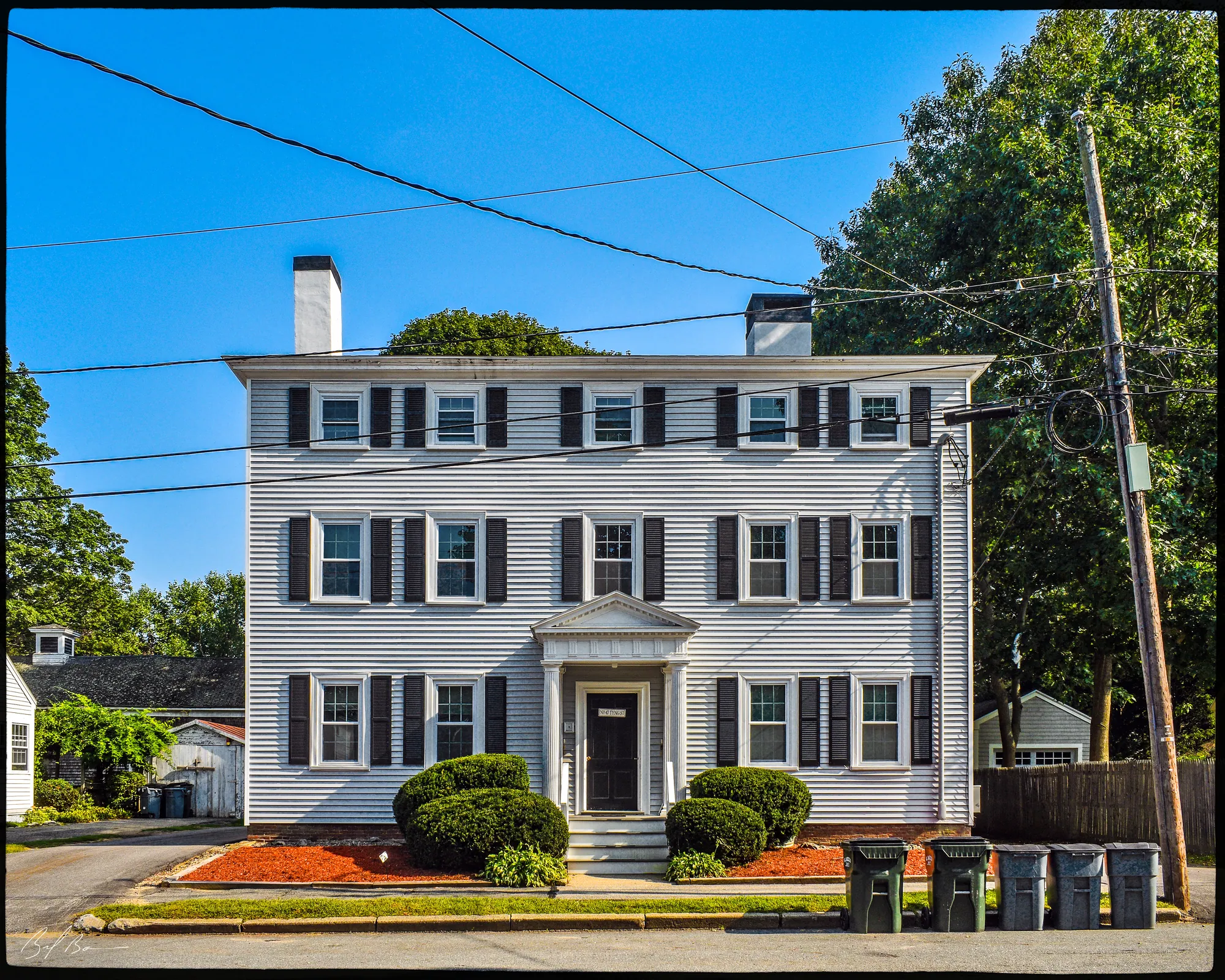
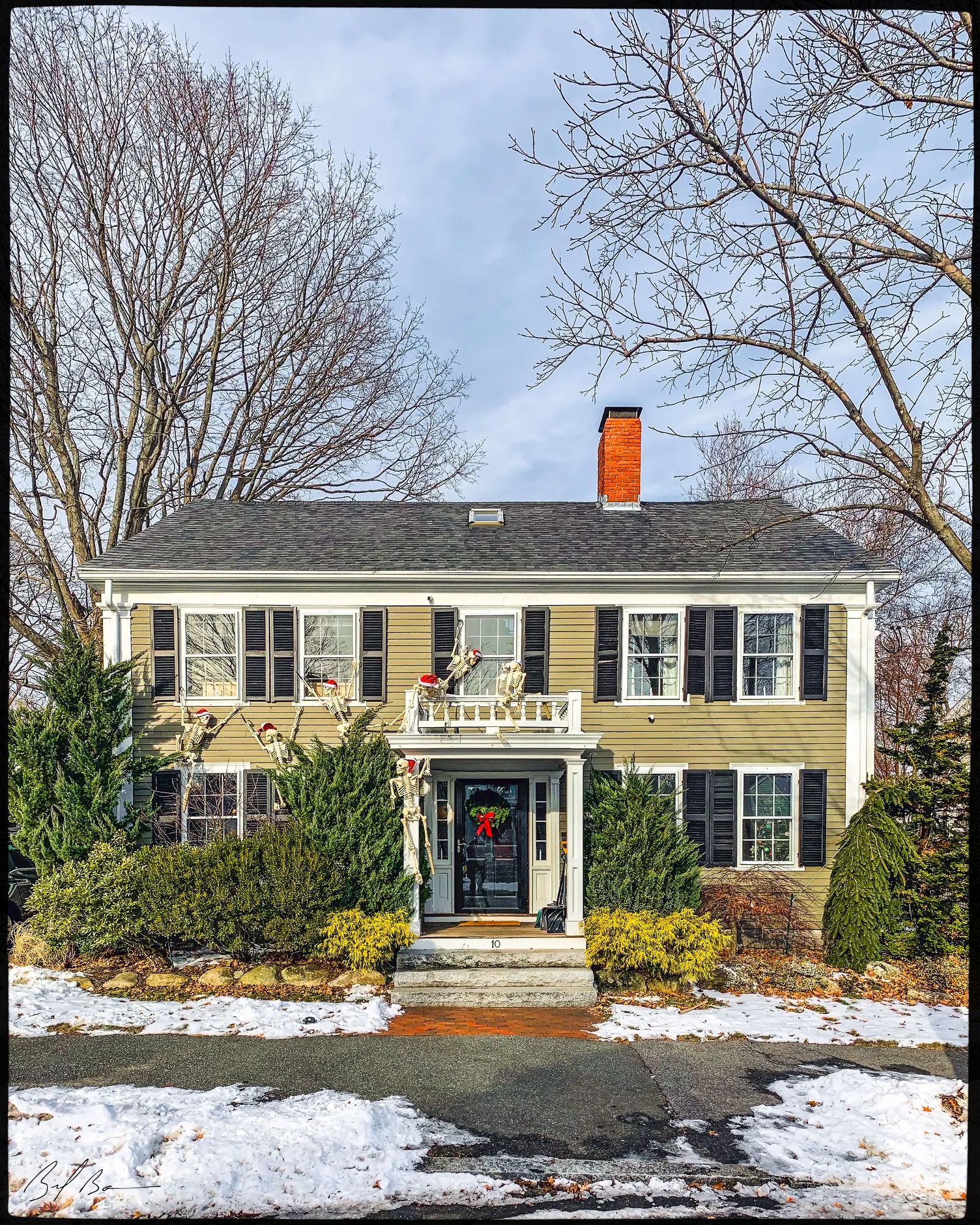
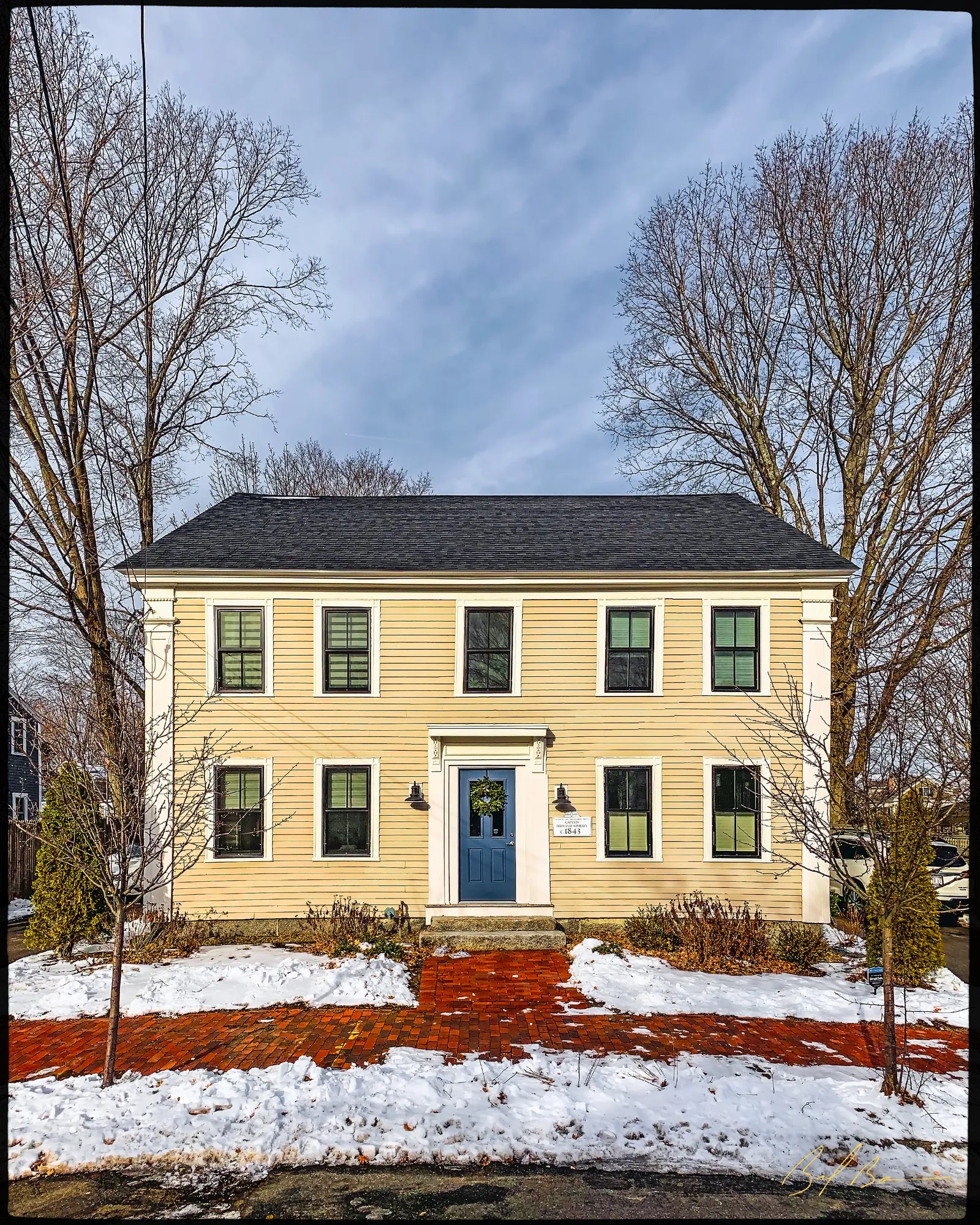
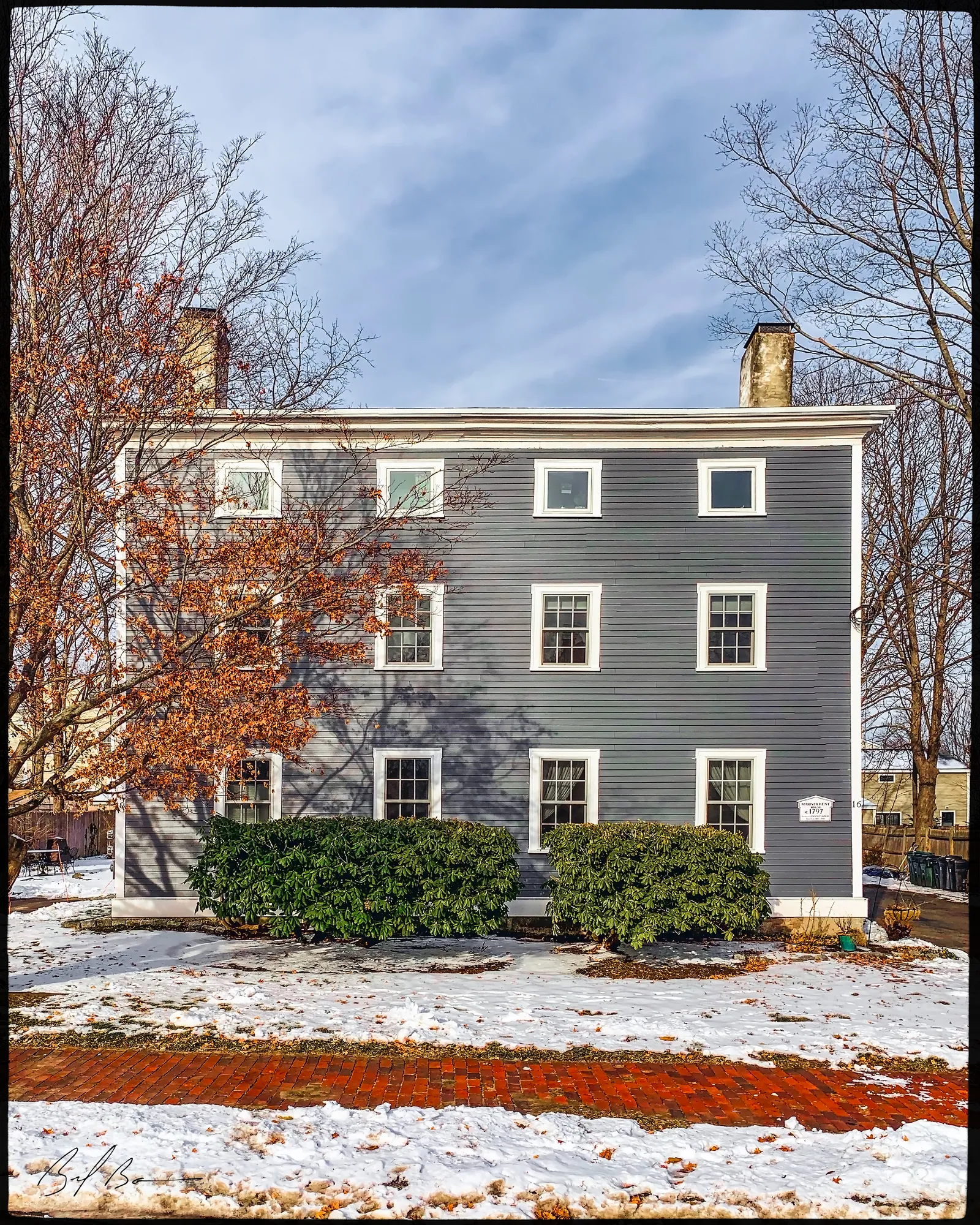
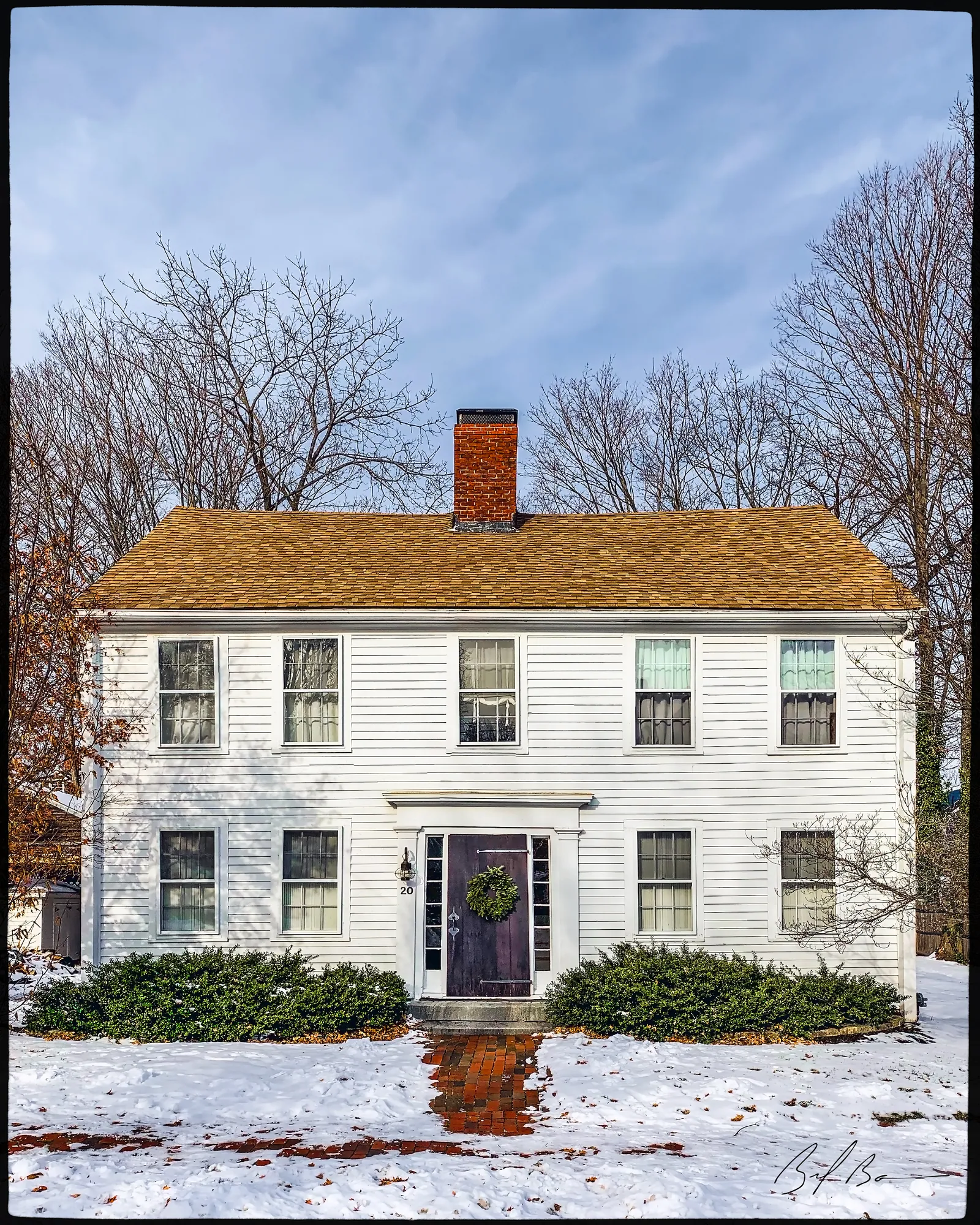
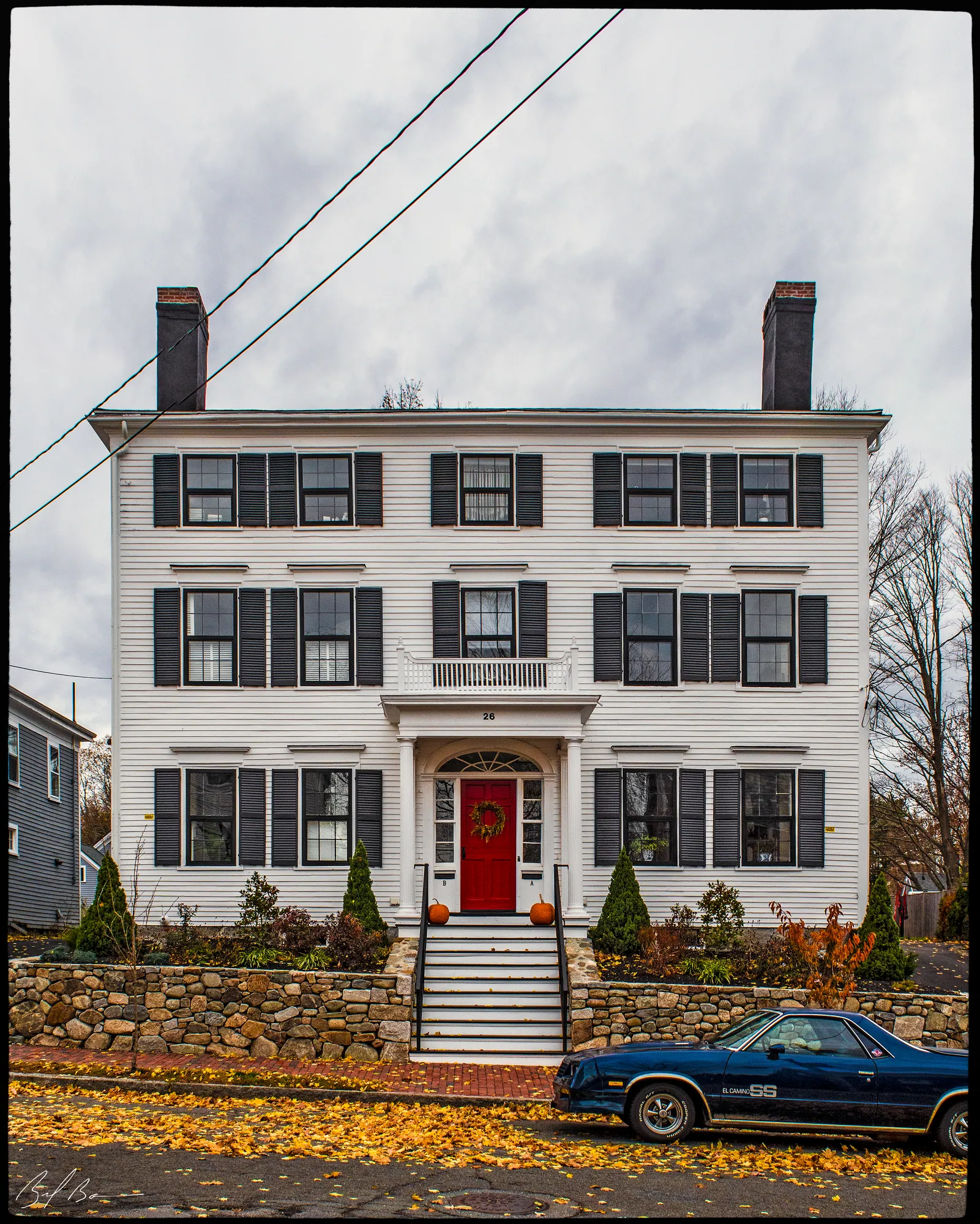
By 1805 Tyng Street existed as a four-rod way from High Street to Merrimac Street. When it got its name is not known, but in 1830 Humphrey Webster sold land bounded on the northwest by an unnamed street, which was called Tyng Street soon after. Settlement began around 1800 and picked up as shipbuilding along Merrimac Street grew.
The houses on this lower stretch stand close together. They are nearly alike: two-story single-family houses with gable roofs facing the street, built late in the Greek Revival period with sidelighted doorways, pilasters, cornerboards and cornices. Some were later updated with bracketed doorways or shingles. 15 Tyng Street, a 20th-century house, is listed as an intrusion.
Most owners worked in shipbuilding. In 1851 Orlando Brown, ship carpenter, George Ordway, salesman, John Dockham, farmer, and Parsons Ordway, ship's carpenter, owned the houses now numbered 5, 7, 9 and 11. By 1872 Wentworth F. Bruce, ship-joiner, owned 17, and Parsons Ordway owned 13. No. 21, owned by J.P. Evans, was built between 1872 and 1884.
Summarized from the Massachusetts Historical Commission's area form. See the MACRIS record ↗